
The Right Color
Starts With the
Right Painter.
Finding the right painter is only half the equation. The other half is making a color decision you'll live with for years. We've built this page to cover both — practical guidance for every space type, and the documented process that ensures your final result looks exactly like what you chose.

Color Intelligence: What Every Space Needs
Color psychology is real — but it's only useful when you know how to apply it to a specific space and its specific function. Here's what we've learned from decades of painting homes, offices, medical facilities, and everything in between.
Living Spaces & Homes
Residential · Interior & Exterior
Residential color decisions live with you 24/7. The stakes are personal — which is exactly why guessing is not a strategy.
Select three core colors that work throughout the home, not just room by room. For common areas, choose a color slightly lighter or darker than your furniture — not an exact match. Use a fourth accent for trim to add depth without clutter.
White is clean and versatile, but applied to large surfaces it reads as blank. Pair whites with blue-gray undertones to create a finished, intentional look rather than an unfinished one.
When you want a saturated color, budget a neutral for balance. Earth tones, warm grays, beige, and off-whites absorb bold hues without losing the energy. Seasonal choices — warm wheat, deep red, muted gray — hold well year-round without reading as trend-driven.
Office & Commercial Environments
Commercial · Office · Hospitality
Your office is a marketing tool. The paint on the walls either supports the work happening inside or quietly undermines it.

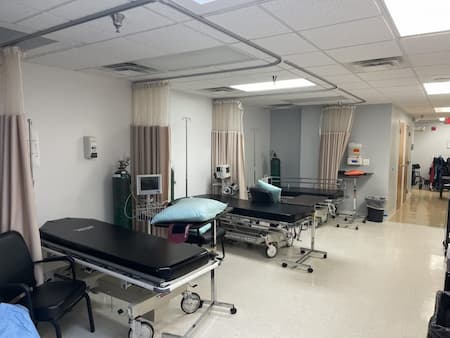
Medical & Healthcare Facilities
Medical · Clinics · Offices
In a medical environment, color influences patient recovery, staff stress, and the impression of professional competence. Each room has a function — and the color should match it.
Light hues, neutral palettes. Pale blue lowers stress and heart rate; soft pink is considered nurturing and calming. Avoid high-contrast color combinations.
Subtle blue or green only. Red is always wrong here. Stark white is too demanding on the eyes. Concentration requires a settled, non-stimulating field.
Two valid approaches: subdued orange or red to re-energize exhausted staff, or muted blue and green to limit anxiety and restore balance before returning to patient care.
Further Color Reading
Practical guidance from our library — specific situations, specific recommendations.
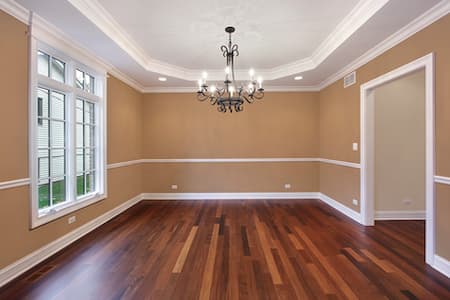
Seasonal Color for Your Home
Warm gray, deep red, wheat, bold orange — the colors that perform well for living spaces across seasons.
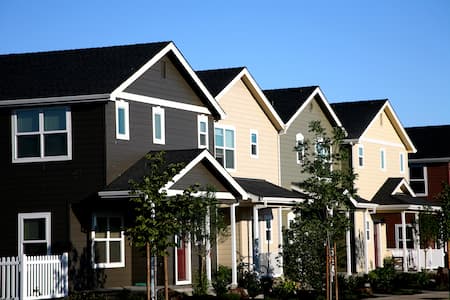
Exterior Colors That Sell
Off-white, gray, light blue, wheat — the exterior palettes that attract buyers and command the highest resale perception.
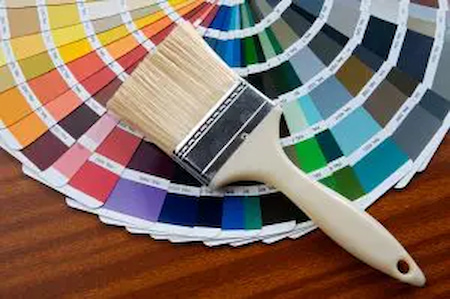
Color Mistakes to Avoid
Matching room-by-room instead of whole-home, applying too much white on large surfaces, and failing to balance bold hues with neutral anchors.
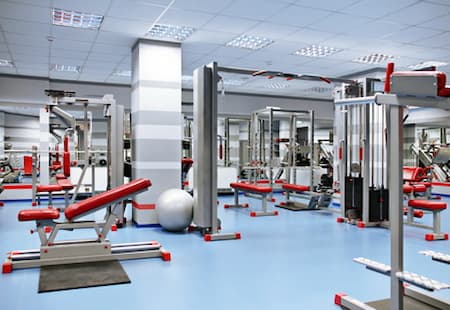
Color Psychology for Fitness Spaces
Red for intensity zones, lavender for yoga studios, light blue for cool-down and locker rooms. Environment drives performance.
The Work Behind the Finish
Every project — residential or commercial, interior or exterior — runs through this checklist before we consider the job complete. It isn't a formality. It's the system that keeps 75 painters producing consistent results across thousands of jobs.
Interior Painting
18-Point Checklist- Arrive to job on time, review worksheet with customer and agree on which area to begin painting
- Furniture and appliances are moved using slip sheets, all surfaces are protected with dropcloths or plastic
- Remove all switch plate and outlet covers
- Every surface being painted is repaired of nail holes, cracks, peeling paint and other defects
- Any water stains are sealed with primers to prevent bleed through
- Mask all thermostats, wall sconces, knobs, hinges and other surfaces not receiving paint
- Wash all dirt, mildew and grime using the appropriate cleaner prior to painting
- Check colors to ensure they match color chip prior to application; confirm the proper sheen is being used
- Caulk and putty trim and lightly sand prior to painting
- Complete safety checklist and ensure that ladders & scaffolds are being used properly
- Double check that all paint is applied evenly and is free from runs, sags or drips
- Lightly sand any glossy surface to provide 'tooth' prior to re-coating
- Inspect newly painted surfaces for proper coverage and touch up if necessary
- Remove all masking and dropcloths and inspect surfaces, clean as necessary
- Re-install all switch plate and outlet covers
- Sweep each room and ensure that all trash and debris has been removed
- Leave all touch-up paint in clearly marked containers
- Walk through job with customer to ensure their complete satisfaction
Exterior Painting
18-Point Checklist- Arrive to job on time, review worksheet with customer and address any concerns regarding pets, parking, etc.
- Protect all shrubs, plants and landscaping with appropriate dropcloths
- Mask all light fixtures, number plates and other items to prevent splatter
- Wash all surfaces of any dirt, mildew or algae prior to painting
- Inspect for rotten or damaged wood and inform customer of necessary repairs
- Remove all loose and deteriorated caulking and replace with lifetime paintable silicone caulk
- Scrape all loose and peeling paint
- Wire brush any rust or corrosion
- Prime all bare or rusted surfaces with appropriate primers
- Complete safety checklist and ensure that ladders & scaffolds are being used properly
- Double check that all paint is applied evenly and is free from runs, sags or drips
- Ensure that all operable window sash is free and not painted shut
- Lightly sand any glossy surfaces for proper adhesion
- Remove all masking and drop cloths and clean paint drips if any
- Inspect for proper coverage and touch up if necessary
- Clean up all paint chips and debris
- Leave all touch-up paint in clearly marked containers
- Walk through job with customer to ensure their complete satisfaction
All required Maryland and DC certifications. General liability and worker's compensation coverage carried on every project. This protects you completely.
We Use Brands You Can Trust
We're willing to use any paint brand you prefer. But when you ask what we recommend, here's our honest answer after decades of applying paint to homes, museums, and institutional buildings across the Annapolis area.

Sherwin-Williams
Our preferred paint brand. After years of applying it to everything from historic government buildings to everyday homes, we've found Sherwin-Williams to be the most durable and effective at a reasonable price point. It holds color, resists wear, and covers consistently.

Benjamin Moore
An excellent premium option. Benjamin Moore carries a slight increase in price over Sherwin-Williams due to coverage rates and formulation. For clients who want the absolute highest-end result, it's a strong choice.

PPG
A reliable option for commercial and industrial projects. PPG formulations perform well in high-traffic environments and are available in a wide range of specialty coatings. Available on request.
We work closely with Maryland Paints & Decorating — a local resource that can help you select colors and get hands-on guidance before your project begins. Ask your estimator for a referral.

Ready to Start
The color is chosen.
Now find the right painter.
Our estimators know color. They've helped homeowners and facility managers make confident decisions for decades. A conversation costs nothing — a wrong color choice is another story.